

Applications at the beginning of stem elongation in cereals are often seen simply as the first major fungicide treatment. Their main purpose is typically to protect the stem base and lower leaves from diseases that can limit yield potential. While this view is understandable, it is also too narrow.
In reality, this stage is one of the most critical periods of the growing season, as it marks the start of effective yield formation. It is a phase of intensive growth and high physiological activity, where agronomic decisions have long-term consequences.
Why stem elongation is fundamental for yield formation
At stem elongation (typically BBCH 30–32), the crop enters a phase of rapid development. Biomass accumulation accelerates, the photosynthetic apparatus expands, and nutrient demand increases significantly.
Focusing only on disease control at this stage means missing an important opportunity to actively support key yield-forming processes, including:
- photosynthesis,
- nutrient uptake and utilization,
- water management,
- nitrogen availability.
The interaction of these factors determines whether the crop can fully express its genetic yield potential.
Diseases during stem elongation – why stem base protection matters
Diseases developing at this stage are among the most damaging, even if they are not always immediately visible. Pathogens infecting the stem base and lower leaves affect structures that are essential for plant stability and for the transport of water and nutrients.
For this reason, stem base protection during stem elongation should not be treated as a routine operation, but as a key decision influencing final yield.
Selecting an appropriate fungicide program remains essential. Depending on the region and disease pressure, key targets may include:
| Disease | Importance during the stem elongation phase | Recommended groups of active substances (in EU)* | Examples of active substances (in EU)* |
| Eyespot | Damage to the stem base and lower internodes, disruption of transport | triazoles, SDHI | prothioconazole, tebuconazole, bixafen, fluopyram |
| Fusarium foot rot | Weakening of the vascular system and nutrient uptake | triazoles, selected SDHI | prothioconazole, tebuconazole, cyprodinil, fluxapyroxad |
| Sharp eyespot | Reduced mechanical stability of the plant | triazoles, SDHI, strobilurins | prothioconazole, azoxystrobin |
| Septoria leaf bloth | Limitation of the assimilative surface of lower leaves | triazoles, SDHI | prothioconazole, epoxiconazole, mefentrifluconazole, fluxapyroxad |
| Powdery mildew | Disruption of gas exchange and photosynthesis | morpholines, triazoles | fenpropidin, spiroxamine, tebuconazole |
| Rust diseases | Accelerated leaf senescence, weakened growth | triazoles, SDHI | tebuconazole, prothioconazole, bixafen |
Protection and physiology must work together
Effective disease control at this stage provides the foundation for further crop development. However, its full potential is only realized when combined with support for plant physiology.
Stem base infections disrupt the transport of water, nitrogen, and assimilates, reducing plant vigor and limiting the efficiency of fertilization and biostimulation strategies. At the same time, leaf diseases reduce photosynthetic capacity at a stage when yield components are being formed.
A comprehensive approach during stem elongation should therefore aim to:
- control early disease development,
- maintain efficient internal transport,
- protect the photosynthetic area,
- ensure optimal nutrient and nitrogen use.
Limitations at this stage cannot be fully compensated by later treatments.
Photosynthesis and nutrition – the starting point for high yield
During stem elongation, the crop operates at high metabolic intensity. Biomass production and yield potential are being established, and any limitations in nutrient availability or physiological activity will directly affect final yield.
Enhancing photosynthetic efficiency
Photosynthesis is the key process of driving yield formation. Supporting it at this stage can significantly improve biomass accumulation and crop performance.
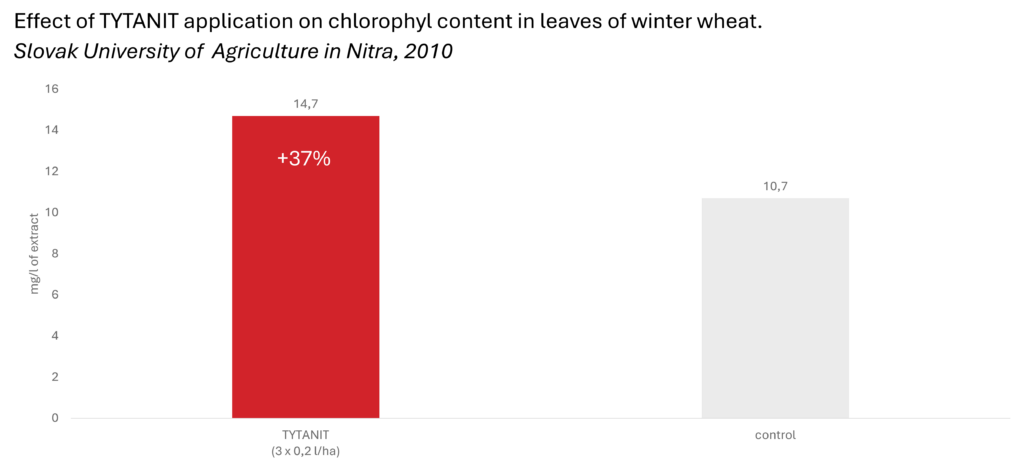
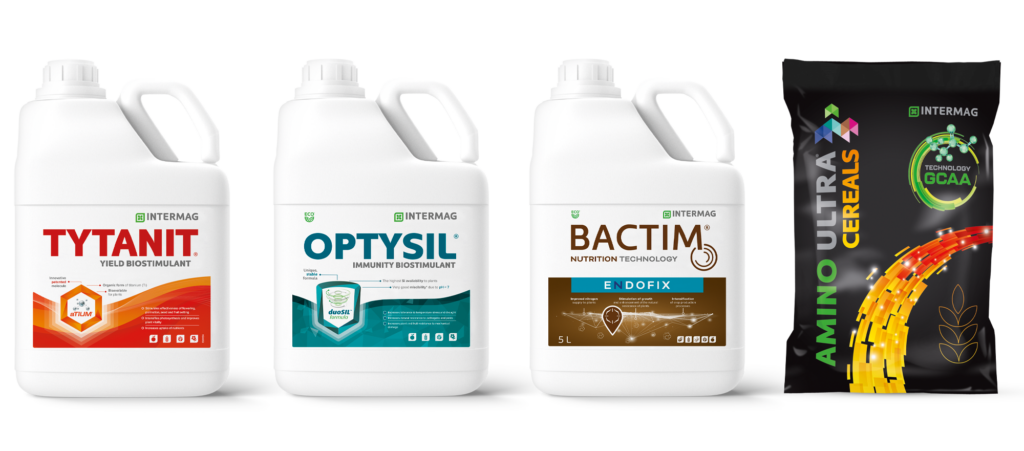
Biostimulants such as TYTANIT® can enhance physiological activity, including increasing chlorophyll content and improving photosynthetic efficiency, leading to higher assimilate production.
Improved nutrient use efficiency
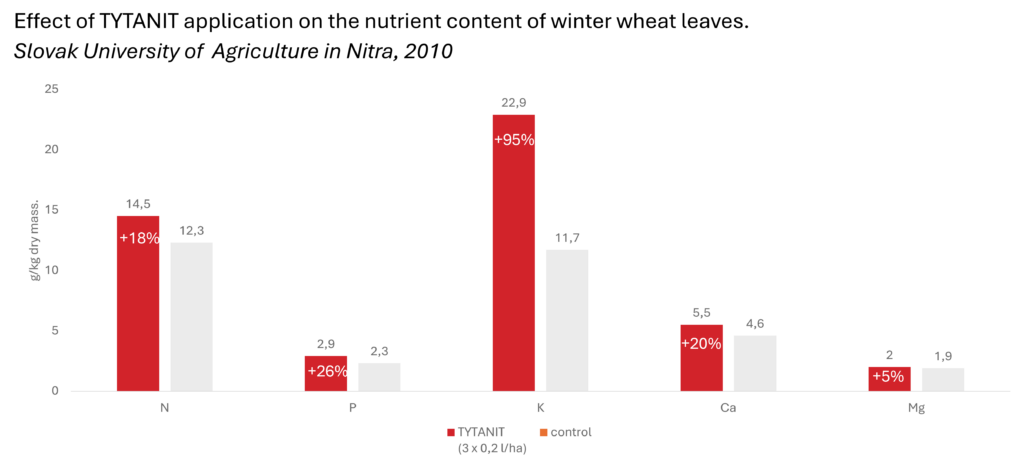
Efficient nutrient use is often more important than simply increasing fertilizer rates. Supporting nutrient uptake and internal utilization helps build a well-nourished and vigorous crop early in the season, creating a strong foundation for further development.
Crop stability during stem elongation – a frequently overlooked factor
Early-season conditions are rarely optimal. Temperature fluctuations, temporary water deficits, and stress from previous operations can all limit crop performance. In such conditions, physiological stabilization becomes essential.
Silicon and stress tolerance
Silicon-based solutions, such as OPTYSIL®, can strengthen plant structure and improve stress tolerance. Silicon strengthens cell walls, reducing excessive transpiration, improves water balance and enhances tolerance to drought and low temperatures.
Field observations indicate that silicon-treated plants:
- maintain higher tissue water content,
- show less cellular damage,
- recover faster after stress.
Stronger cell walls may also act as a physical barrier, supporting disease control strategies.
Nitrogen availability when the crop needs it most
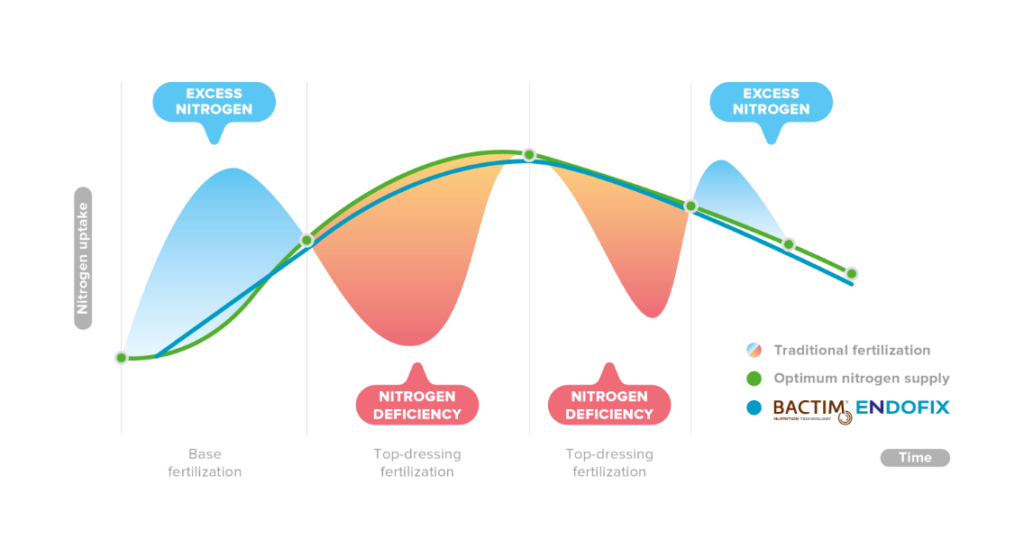
Nitrogen remains the key yield-forming nutrient in cereals. However, its efficiency depends on availability at critical growth stages. During stem elongation, any interruption in nitrogen supply can result in irreversible yield losses.
Endophytic nitrogen fixation
Solutions such as BACTIM® ENDOFIX introduce endophytic bacteria (Paenibacillus polymyxa) that fix atmospheric nitrogen directly within plant tissues, supplying it in ammonium form (NH₄⁺).
This process:
- operates across a wide temperature range,
- continues throughout the growing season,
- is less dependent on soil conditions.
After application, the bacteria colonize plant tissues and provide a stable nitrogen source during periods of high demand.
Rapid foliar nutrition under stress conditions
At early growth stages, root systems may not yet function at full efficiency. In such cases, foliar nutrition becomes a key tool.
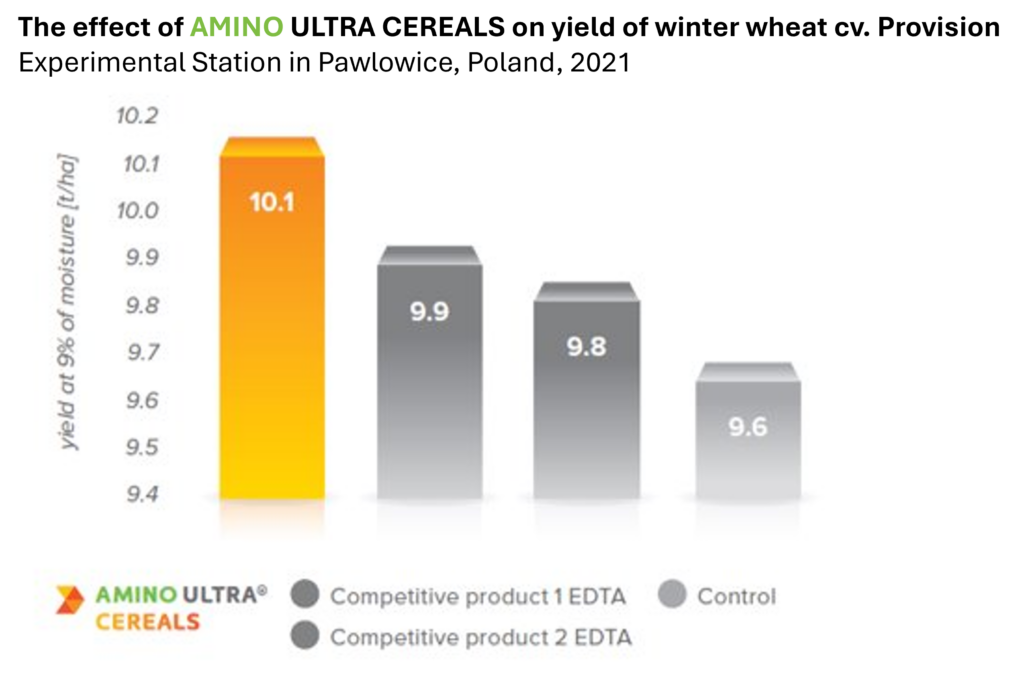
Fertilizers based on advanced technologies, such as AMINO ULTRA® (GCAA technology), enable:
- faster nutrient uptake by leaves,
- improved translocation within the plant,
- higher efficiency compared to standard formulations.
Key micronutrients at this stage include:
- manganese – supporting photosynthesis and enzymes activity,
- copper – contributing to structural strength and resistance,
- zinc – regulating hormonal balance.
Synergy during stem elongation – more than the sum of individual actions
A well-designed approach at this stage supports multiple aspects of crop performance at the same time.
The crop can:
- increase photosynthetic activity and energy production,
- improve nutrient use efficiency,
- enhance stress tolerance,
- secure a stable nitrogen supply,
- rapidly correct micronutrient deficiencies.
This is not a simple sum of effects, but a synergistic system where each element reinforces the others.
Stem elongation – the first step towards high cereal yield
With increasing climate variability and production demands, a purely protective approach is no longer sufficient.
While disease control remains essential, this stage should be seen as a strategic moment to actively shape yield potential. It is the phase where decisions influence not only crop health, but also productivity and stability throughout the rest of the season.
FAQ
Does stem elongation management influence final yield?
Yes. Crop condition at this stage directly affects yield potential.
Is this stage only about fungicide application?
No. A modern approach integrates crop protection with nutrition, growth regulation, and physiological support.
Why support plant physiology at this stage?
Because this is a period of intensive metabolic activity that determines further crop development.


